

BATTERY STORAGE
When the outboard motor will not be used for a month or longer, remove the battery and store it in a cool, dark place. Do not set battery on concrete or earth, as this will accelerate loss of charge.
Wash the casing and terminals using fresh water only, then dry with clean cloth.
Fully charge the battery. If the battery will be stored for a long period of time, check the specific gravity of the fluid at least once a month and recharge the battery when the charge is low.
• Explosive vapors are produced by batteries. Do not smoke, and keep battery away from open flames and sparks. To avoid creating a spark when charging the battery, connect the battery charger cables to the proper terminals before turning the battery charger on.
• Handle the battery with extreme care; avoid skin contact with electrolyte. Wear proper protective clothing (Safety glasses, gloves, etc.
AFTER STORAGE
When taking your motor out of storage, follow the procedure below to return it to operating condition:
Thoroughly clean the spark plugs. Replace them if necessary.
Check the gear-case oil level and if necessary, add gear oil according to the procedure outlined in the GEAR OIL section.
Lubricate all moving parts according to the LUBRICATION section.
Check the engine oil level.
Clean the motor and wax the painted surfaces.
Recharge the battery before installing it.
GENERAL INFORMATION
WARRANTIES (For U.S.A)
The warranties covering your outboard motor are explained in a separate Limited Warranty booklet given to you at the time of sale. Please read this booklet carefully so you can understand your rights and responsibilities.
DENTIFICATION NUMBER LOCATION
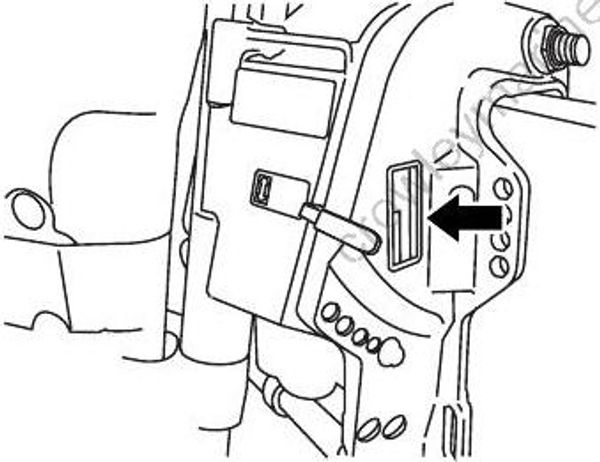
The model and identification numbers of your outboard motor are stamped on a plate attached to the clamp bracket. Record these numbers below for future reference. It is important to know these numbers when you place a
parts order or if your motor is stolen.
Model Number:
Identification Number:
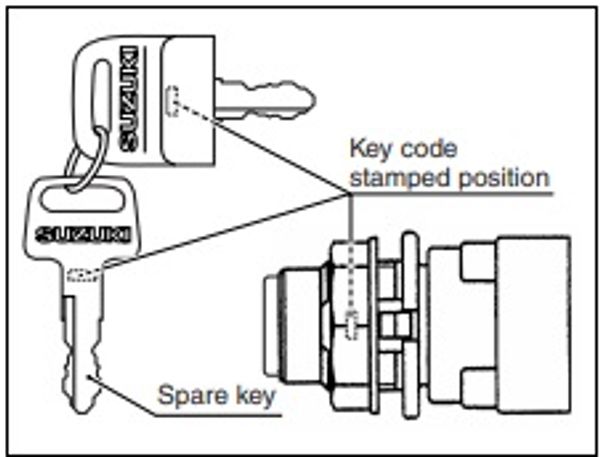
Ignition Key Number:
EMISSION CONTROL INFORMATION
• THIS ENGINE IS CERTIFIED TO OPERATE ON UNLEADED GASOLINE OF 87 OCTANE ((R+M)/2 METHOD) OR GREATER.
• EXHAUST EMISSION CONTROL SYSTEM: ECM, MFI
TROUBLESHOOTING
This troubleshooting guide provided to help you find the cause of common complaints.
Failure to troubleshoot a problem correctly can damage your outboard motor. Improper repairs or adjustments may damage the outboard motor instead of fixing it. Such damage may not be covered under warranty.
If you are not sure about the proper action, consult your Suzuki Marine Dealer about the problem.
Starter motor will not operate:
Shift lever is not in NEUTRAL.
Fuse is blown out.
Emergency stop switch lock plate is not in position.
Engine will not start (hard to start):
Fuel tank is empty.
Fuel hose is not properly connected to engine.
Fuel hose is kinked or pinched.
Spark plug is fouled.
Engine idles unstably or stalls:
Fuel hose is kinked or pinched.
Spark plug is fouled.
Engine speed will not increase (Engine power is low):
Engine is overloaded.
Caution/Diagnostic system is activated.
Propeller is damaged.
Propeller is not properly matched to loads.
Engine vibrates excessively:
Engine mounting bolts or clamp screws are loose.
Foreign object (seaweed etc.) is tangled on propeller.
Propeller is damaged.
Engine overheats:
Cooling water intake(s) are blocked.
Engine is overloaded.
Propeller is not properly matched to loads.