

Step 1: OPERATION IN SALT WATER
After operating the motor in salt water, you should flush the water passages with clean, fresh water as outlined in the FLUSHING THE WATER PASSAGES section. If you do not flush the water passages, salt can corrode the motor and shorten its life.
Step 2: OPERATION IN FREEZING WEATHER
When operating your outboard motor in freezing temperatures, you should keep the lower unit submerged in the water at all times.
When taking motor out of the water, stand it up in a vertical position until the cooling system drains completely.
If you leave your outboard motor out of the water in freezing temperatures with water still in the cooling system, the water can freeze and expand, causing severe damage to the motor.
Step 3: MOTOR REMOVAL AND TRANSPORTING
MOTOR REMOVAL
If it is necessary to remove the outboard motor from your boat, we recommend that you ask your authorized Suzuki Marine Dealer to do the work for you.
MOTOR TRANSPORTING
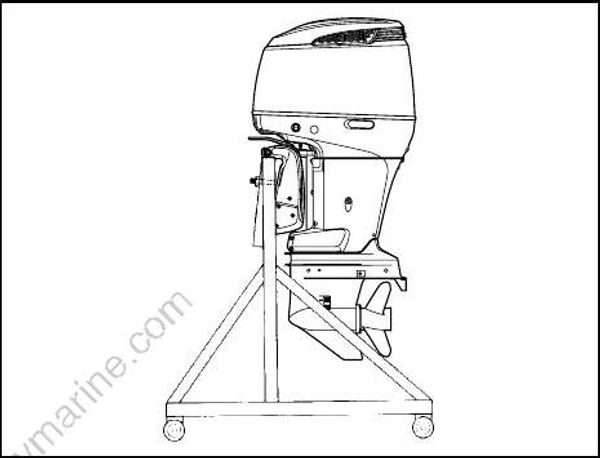
When transporting the motor, place the motor either vertically or horizontally.
Vertical transport:
Attach the clamp bracket to a stand by securing two transom bolts.
Horizontal transport:
- Drain the engine oil. Refer to the ENGINE OIL section.
- Drain the gasoline from the vapor separator as follows:
(1) Remove the motor cover.
(2) Loosen the air vent screw (1).
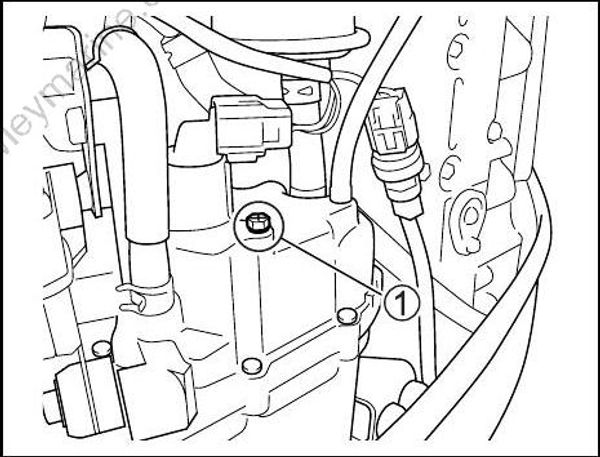
(3) Loosen the vapor separator drain screw (2) and drain the gasoline into a suitable container.

Use a proper, safe container to store any gasoline drained from the outboard motor.
(4) After draining, retighten the screws (1) and (2).
- Rest the motor on a case protector with the port side downwards as shown.
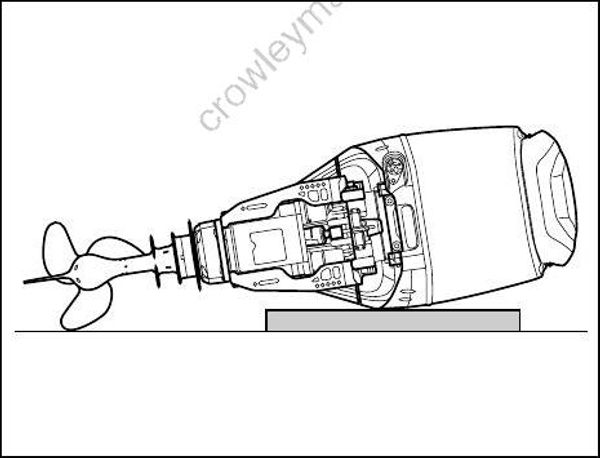
• Do not rest the engine before the engine oil has drained, as oil may enter the cylinder from the sump or outer casings may be damaged.
• Do not rest the engine before the cooling water has drained completely, as water may enter the cylinder through the exhaust port and cause problems.
Do not let the lower unit of the outboard sit higher than the power head during transporting or storing, or water may trickle into the power head, causing damage to the engine.