

BREATHER AND FUEL LINE
Inspect the breather and fuel line for leaks, cracks, swelling, or other damage. If the breather and fuel line are damaged in any way, they must be replaced. Consult your authorized Suzuki Marine dealer if it is necessary to replace them.
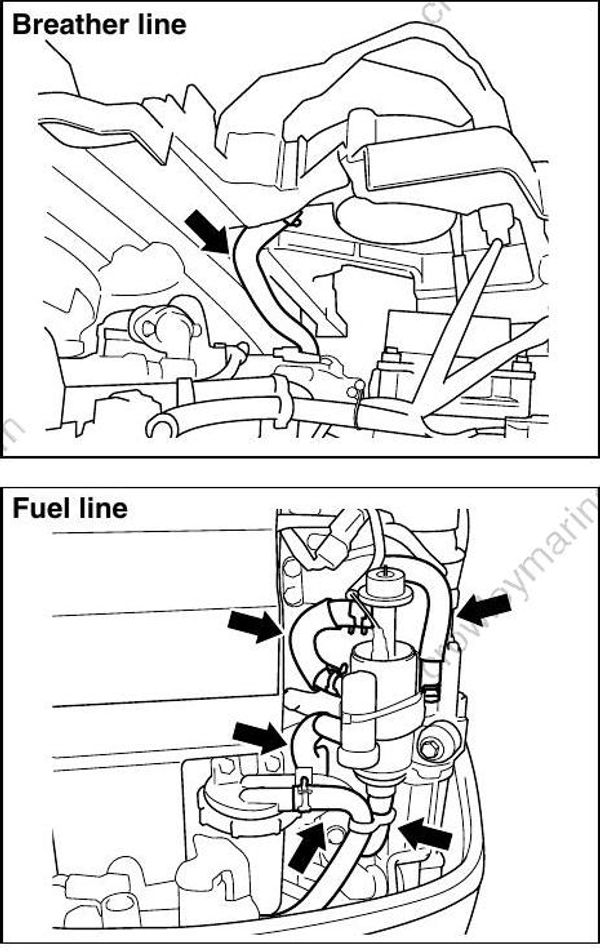
Fuel leakage can contribute to an explosion or fire, causing serious personal injury. Have your authorized Suzuki Marine Dealer replace the fuel line if there is any evidence of leaking, cracking or swelling.
ENGINE OIL
The motor must be shut off before any ENGINE OIL procedures are performed.
The oil should be changed more often when the engine is operated under adverse conditions like extended trolling.
Engine oil change
The engine oil should be changed when engine is warm so that the oil will drain thoroughly from the engine.
To change the engine oil:
- Place the motor in a vertical position and remove the motor cover.
- Remove the oil filler cap.
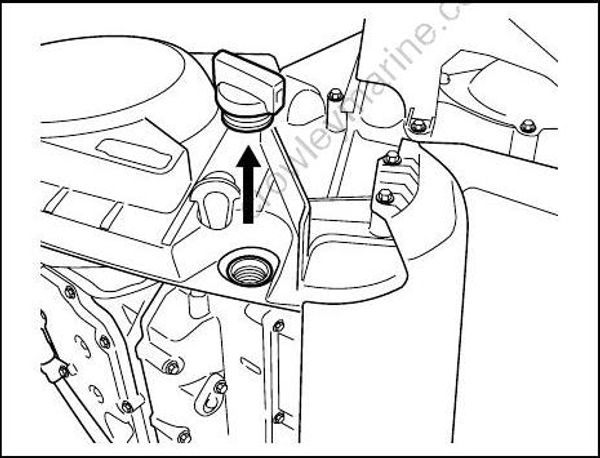
- Place a drain pan under the engine oil drain screw.
- Remove the engine oil drain screw (1) and gasket (2), then let the engine oil drain.

- After draining, secure the engine oil drain screw with a new gasket.
Do not re-use gasket removed. Be sure to use new gasket.
There are spare gaskets in the tool bag.
- Fill with recommended engine oil to the upper level.
Oil capacity: 8.0 L (8.5/7.0 US/Imp. qt)
Engine oil: SAE (or NMMA FC-W) 10W-40
API (or NMMA FC-W) Classification SE, SF, SG, SH, SJ
- Check the engine oil level.
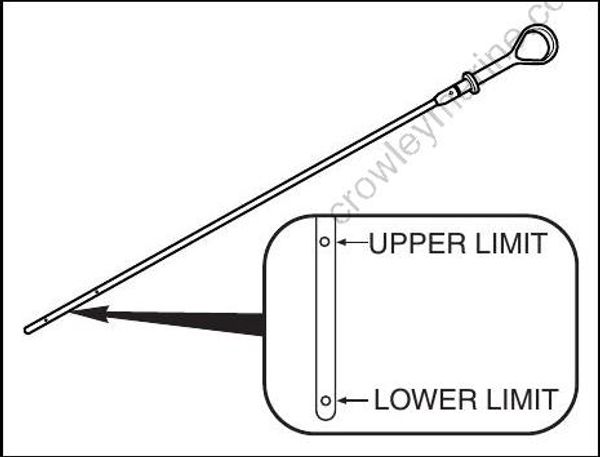
To avoid incorrect measurement of engine oil level, check oil level only when the engine has cooled.
- Reinstall the oil filler cap.
• The engine oil temperature may be high enough to burn your fingers when the drain plug is loosened. Wait until the drain plug is cool enough to touch with bare hands.
• New and used oil can be hazardous. Children and pets may be harmed by swallowing new or used oil. Continuous contact with used engine oil has been found to cause skin cancer in laboratory animals. Brief contact with used oil may irritate skin.
• Keep new and used oil away from children and pets. To minimize your exposure to oil, wear a long-sleeve shirt and moisture-proof gloves (such as dishwashing gloves) when changing oil. If oil contacts your skin, wash thoroughly with soap and water. Launder any clothing or rags if wet with oil.
Recycle or properly dispose of used engine oil. Do not throw it in the trash, pour it on the ground, down a drain, or into the water.