

Step 1: Inspection And Maintenance
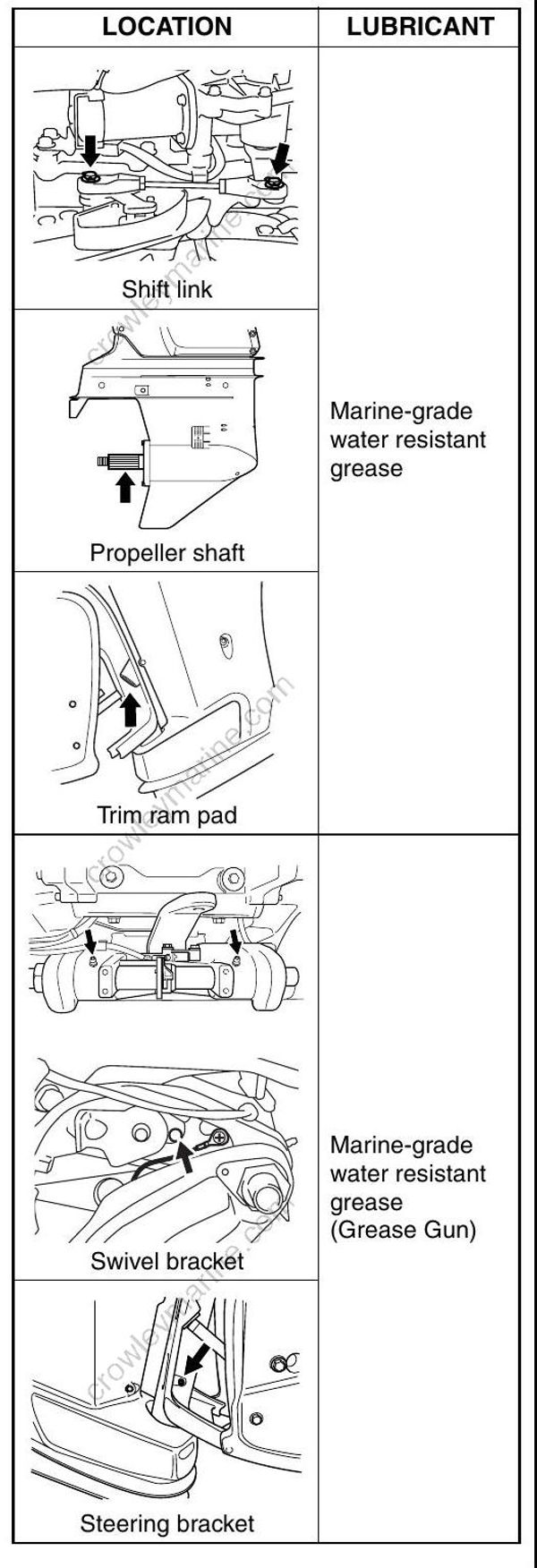
Your authorized Suzuki Marine Dealer may also have additional recommendations due to regional climate or operating conditions.
Please consult him for advice.
Step 2: CORROSION PREVENTION
ANODES
The motor is protected from exterior corrosion by anodes. These anodes control electrolysis and help prevent corrosion. The anodes will corrode in place of the parts they are protecting. You should periodically inspect each of the anodes and replace them when 2/3 of the metal has corroded away.
In certain areas of the country, the water is unusually harsh on metal. Additional anti-corrosion measures may be helpful under those conditions. Consult your authorized Suzuki Marine Dealer for details.
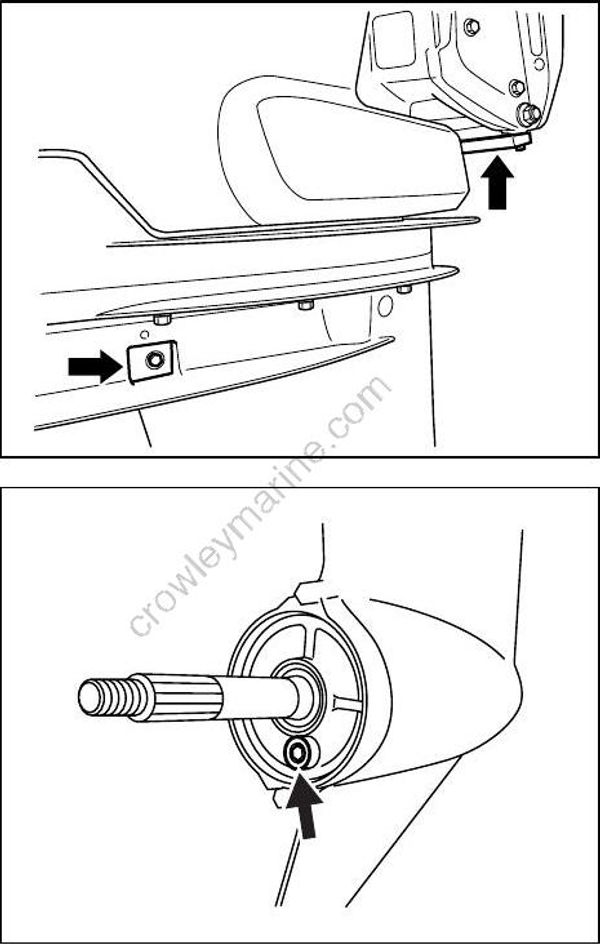
• If anodes have become detached or corroded away, underwater aluminum surfaces (such as the lower unit) will suffer galvanic corrosion damage.
• Do not paint anodes, as this will render them ineffective.
• All anodes should be cleaned periodically with a wire brush to remove any coating which might decrease their protective ability.
BONDING WIRES
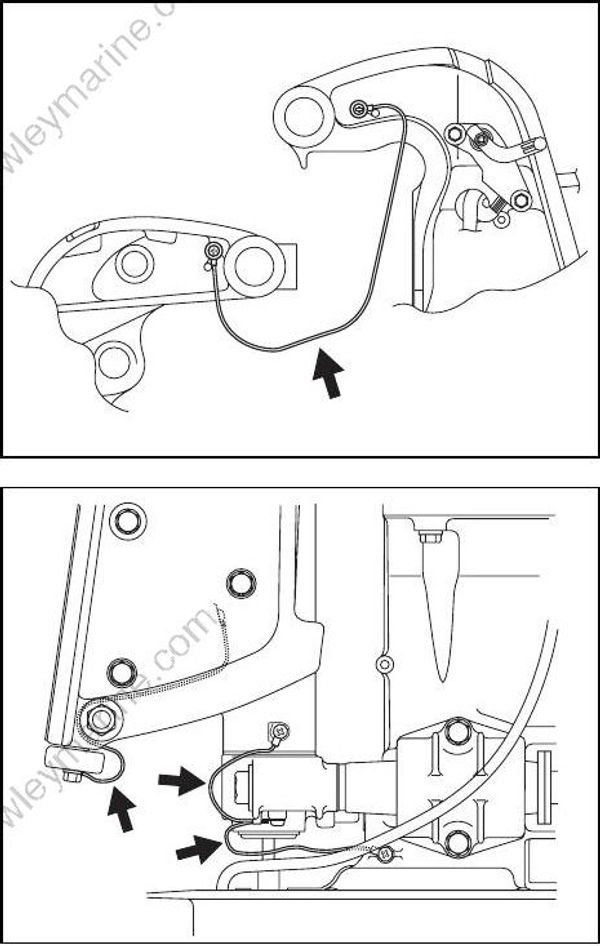
Bonding wires are used to electrically connect the engine components so they exist in a common ground circuit. This allows them to be protected against electrolysis by the anodes. These wires and their terminals should be checked periodically to be sure they have not been damaged.
Step 3: BATTERY
If you are using a maintenance-free battery, inspect the window area according to the instructions on the battery to make sure the battery is in good condition.
If you are not using a maintenance-free battery, the battery fluid level should be checked every 50 hours of operation or 3 months. The battery solution level must be kept between the MAX and the MIN level lines at all times. If the level drops below the MIN level line, add DISTILLED WATER ONLY until the battery solution level reaches the MAX level line.
Battery acid is poisonous and corrosive. Avoid contact with eyes, skin, clothing, and painted surfaces. If battery acid comes in contact with any of these, flush immediately with large amounts of water. If acid contacts the eyes or skin, get immediate medical attention.
When checking or servicing the battery, disconnect the negative (black) cable. Be careful not to cause a short circuit by allowing metal objects to contact the battery posts and the motor at the same time.
Battery posts, terminals, and related accessories contain lead and lead compounds. Wash hands after handling.
Once the battery has been initially serviced, NEVER add diluted sulphuric acid, or you will damage the battery. Follow the battery manufacturer’s instructions for specific maintenance procedures.