

FLUSHING THE WATER PASSAGES
After operation in muddy, brackish, or salt water, you should flush the water passages and motor surface with clean, fresh water.
If you do not flush the water passages, salt can corrode the motor and shorten its life. Flush the water passages as follows.
ENGINE RUNNING – Vertical position –
Suzuki recommends that you flush the water passage by using this method.
To flush the water passages, you must obtain a commercially available engine flush device.
Exhaust gas contains carbon monoxide, a dangerous gas that is difficult to detect because it is colorless and odorless. Breathing carbon monoxide can cause death or severe injury. Never start the engine or let it run indoors or where there is little or no ventilation.
Failure to take proper precautions when flushing the water passages can be hazardous. When flushing the water passages, always take the following precautions: Make sure that the engine remains in NEUTRAL. If shifted into gear, the propeller shaft will turn and could cause severe personal injury. Make sure the motor is properly clamped to a secure stand or boat, and remain in attendance until flushing is completed. Keep children and pets away from the area, and stay clear of all moving parts.
Severe engine damage can occur in as little as 15 seconds if the engine is started without supplying water to the cooling system. Never start the motor without supplying water to the cooling system.
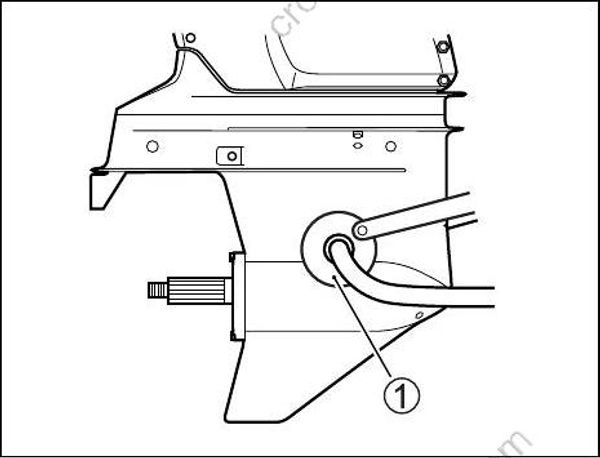
Install the flushing attachment (1) so that the water intake holes are covered by the rubber cups on the attachment.
Connect a garden hose to the flushing attachment and turn on the water to obtain enough flow so that plenty of excess water is flowing out from around the rubber cups on the attachment.
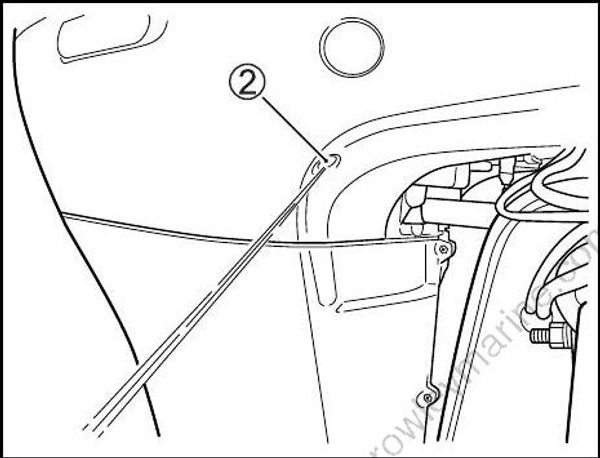
- Place the remote control handle in the “NEUTRAL” position with the propeller removed and start the motor. As soon as the engine starts, water should spray out of the pilot water hole (2), indicating proper water pump operation. If no water spray is evident, stop the motor immediately and consult your dealer.
Allow the engine to run only at idle speed while flushing. Readjust the water flow, if necessary, so that there is still plenty of excess water flowing out from around the rubber cups.
Allow the water to continue circulating for a few minutes.
Stop the motor, then turn off the water.
Remove the flushing attachment from the water intake hole.
Clean the motor surface and apply a coat of automotive wax on the external finish of the motor.
ENGINE NOT RUNNING – Vertical position –
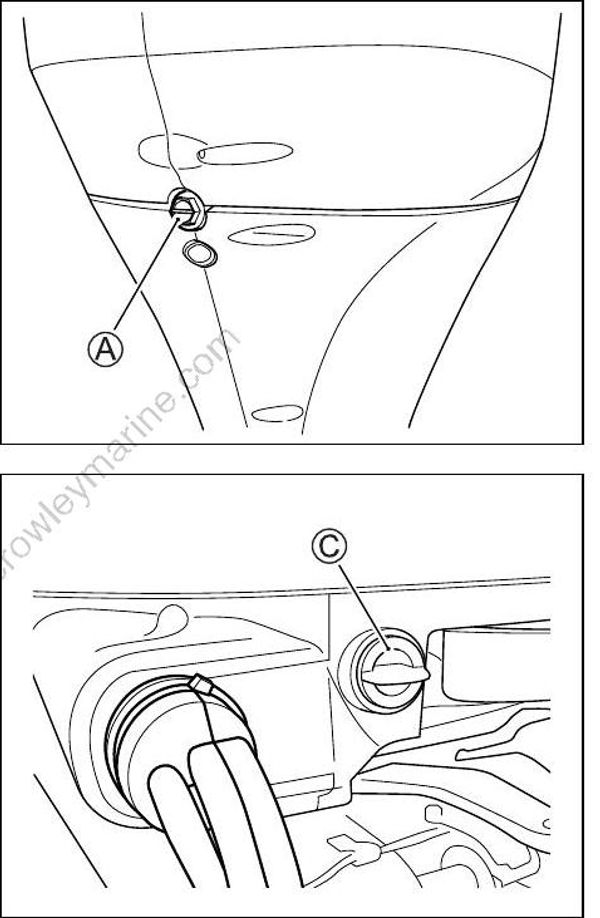
- Remove one of the plug (A) or (C) from the two flushing ports.
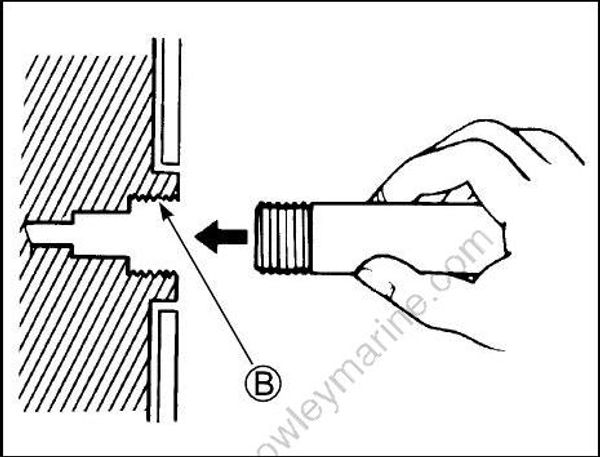
- Install garden hose directly or by using a hose connector matched to flushing point thread (B).
Thread (B): 0.75 – 11.5 NHR (American standard hose coupling threads for garden hose applications.
The hose connector (flushing attachment) matched to the flushing point thread B is included in the crate parts.
Turn on the water to obtain a good water flow. Flush the engine for about five minutes. 4. Turn off the water.
Remove the hose and connector (if used) then reinstall the plug into the flushing port. 6. Leave the motor in a vertical position until the engine is drained completely.
ENGINE NOT RUNNING – Full tilt up position –
Raise the engine to the full tilt up position.
Follow the “ENGINE NOT RUNNING – Vertical position” instructions.
DO NOT RUN ENGINE IN THE FULL TILT UP POSITION.
- Lower the motor to a vertical position until the engine is drained completely.
SUBMERGED MOTOR
If your motor has been accidentally submerged in water, it must receive a special repair service as soon as possible to prevent corrosion. If possible, have a qualified marine dealer service the engine. If immediate servicing is not available, take the following steps to help protect your motor. In the event that your motor is accidentally submerged, take the following steps:
Get the motor out of the water as soon as possible.
Remove the motor cover and immediately wash the engine thoroughly with fresh water to completely remove all salt, mud, and sea weed.
Remove the spark plugs. Drain the water from the cylinders through the spark plug holes by manually turning the flywheel several times.
Check if any water is evident in the engine oil. If water is seen, remove the oil drain plug and drain the oil. After draining, tighten the oil drain plug.
Drain the fuel line and all filters.
Gasoline is extremely flammable and toxic. It can cause a fire and can be hazardous to people and pets. Keep flames and sparks away from gasoline. Dispose of unwanted fuel properly.
- Pour one tablespoon of engine oil in through each spark plug hole. Coat the engine inner parts with oil by manually turning the fly wheel several times. Don’t use the electric starter, as this may bend the connecting rods.