

OPERATION
BEFORE ATTEMPTING TO START THE ENGINE
Lower the motor into the water.
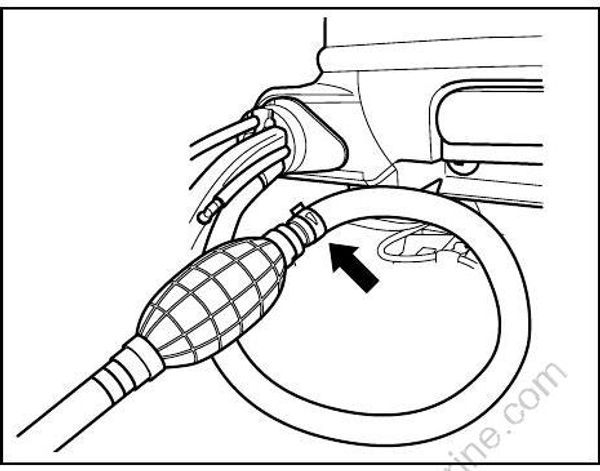
Make sure that the motor fuel hose and the hose from the boat’s fuel tank are securely attached and clamped.
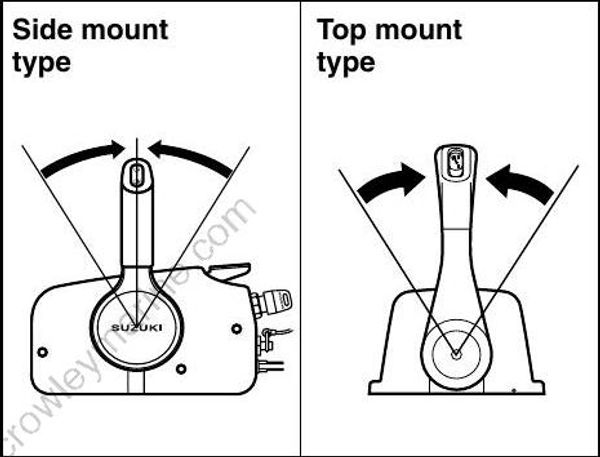
- Make sure the motor is in “NEUTRAL”.
- Make sure the lock plate is in place and the emergency stop switch cord is fastened securely to your wrist or appropriate clothing area such as your belt.
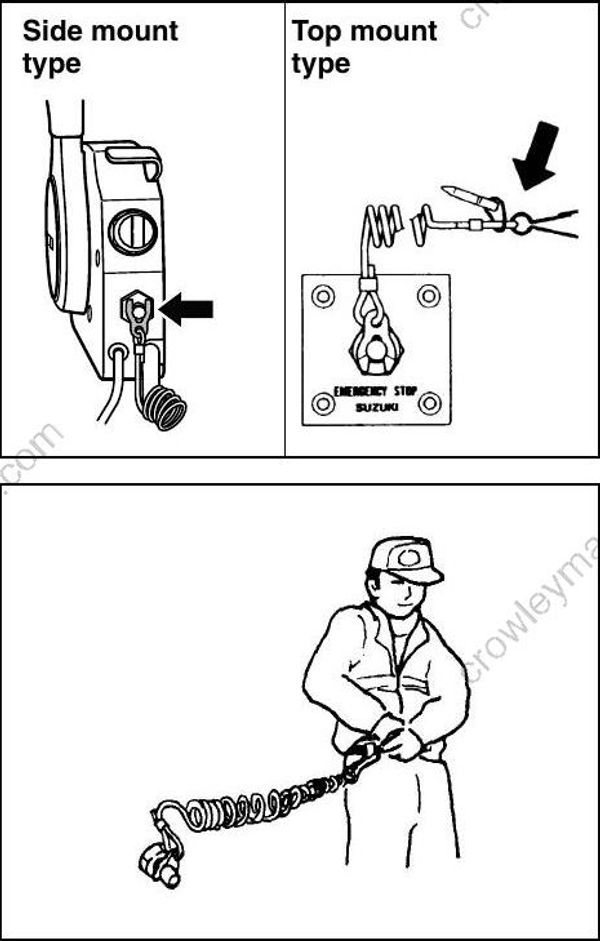
• The emergency stop switch cord should be fastened securely to the operator’s wrist or to an appropriate clothing area (belt etc.). In this way, in
an emergency, or if the operator is thrown overboard, the detached cord will stop the motor quickly.
• Ensure that no obstructions impede or restrict emergency stop switch operation.
• Take care not to pull the stop switch cord or knock out the lock plate during normal operation. The motor will stop abruptly, and the loss of forward motion may unexpectedly throw occupants forward.
There is a spare plastic lock plate for temporary use only. Remove it from the cord and place in a safe place on the boat. However, the original cord and lock plate should be replaced as soon as possible
STARTING THE ENGINE
• Never start the engine or let it run indoors or where there is little or no ventilation. Exhaust gas contains carbon monoxide, a gas that is colorless and odorless and can cause death or severe injury.
• Before starting the engine, make sure that you have enough fuel and oil to complete your intended trip.
If the emergency stop switch lock plate is not in position, the starter motor cannot operate.
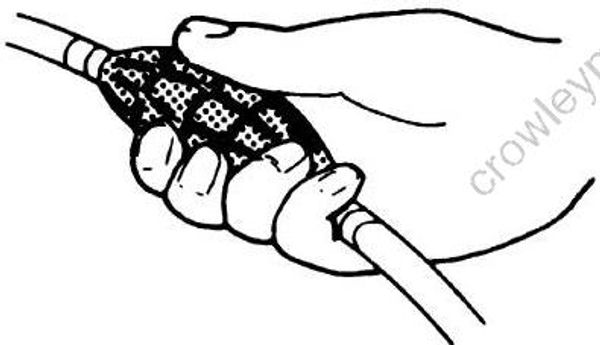
- Squeeze the fuel line priming bulb several times until you feel resistance.
- Side mount type:
Make sure the warm-up lever is in the fully closed position.
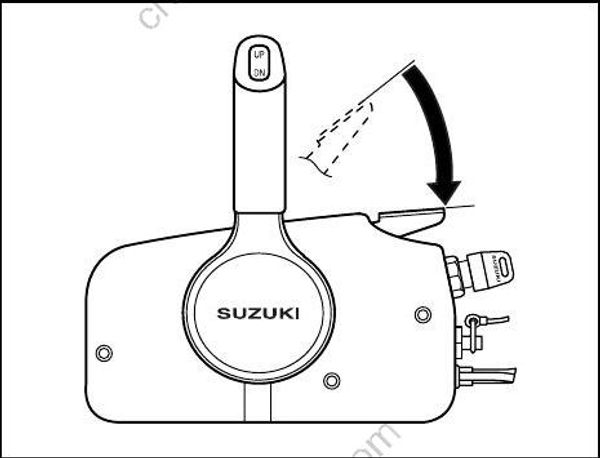
- Turn the ignition key to the “ON” position, then observe the monitor-tachometer indication. If nothing abnormal is indicated, then turn the key to the “START” position to start the engine.
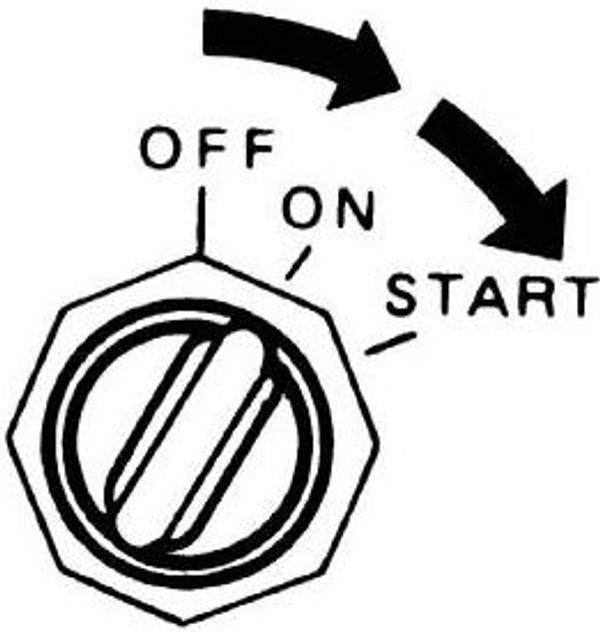
Never move the ignition key to “START” position for more than 5 seconds, or the starter system could be damaged.
If the OIL lamp remains lit while operating, check the engine oil level after stop- ping the engine.
If the engine fails to start after 5 seconds, wait a few seconds and try again.
- Warm up the engine for about 5 minutes.
Cooling water check
As soon as the engine starts, water should spray out of the pilot water hole (1), indicating that the water pump and cooling system are working properly. If you notice that water does not spray out of the pilot water hole, stop the engine as soon as possible and consult your authorized Suzuki Marine Dealer.
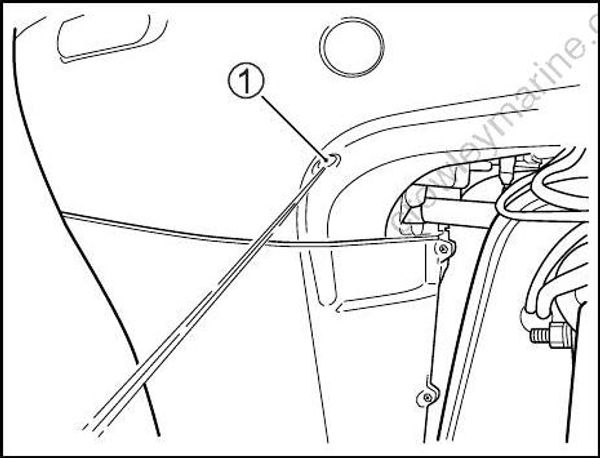
• Never operate your outboard motor when there is no water coming out of the pilot water hole, or severe damage can result.
• Before setting off, be sure that emergency stop switch operates properly
SHIFTING AND SPEED CONTROL
• Before shifting from “FORWARD” to “REVERSE” or from “REVERSE” to “FORWARD”, stop at the “NEUTRAL” position and allow the engine speed to return to idle and the boat speed to reduce.
• Exercise caution and use minimal speed when operating the boat in reverse. Be sure the handle/shift lever is in the desired position before accelerating.
Avoid shifting into gear when the engine is not running, or the shifting mechanism can be damaged
STOPPING THE ENGINE
To shift into “FORWARD”, squeeze the lock-out lever on the control handle and move the control handle forward to approximate position A, as shown in the illustration.
To shift into “REVERSE”, squeeze the lock-out lever on the control handle and move the control handle rearward to approximate position B, as shown in the illustration.
A detent or notch is present on all Suzuki control boxes to provide a “feel” for positions A, B, and neutral. Always shift quickly and firmly from neutral to position A or B to prevent abnormal wear on the gear and clutch engagement sur faces.
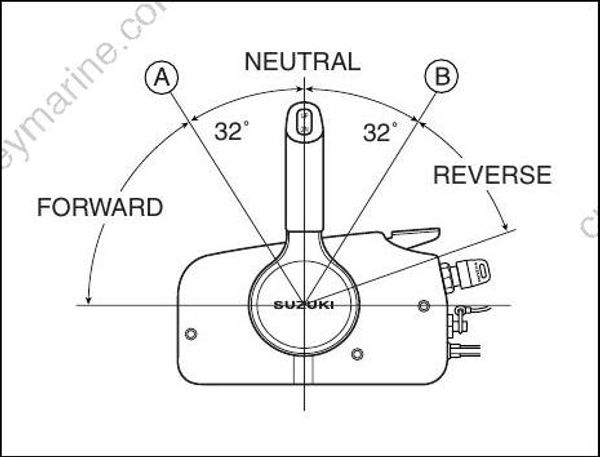
Top mount type
Not equipped with a lock-out lever. Exercise
care when selecting neutral position.
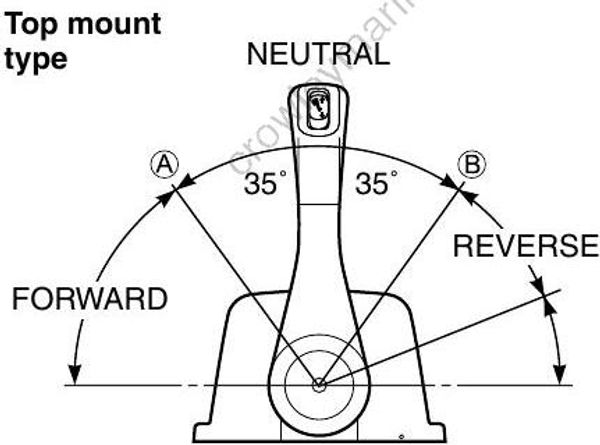
Speed control
To increase speed after you have shifted into gear, continue moving the control handle for ward or rearward.
Since the same handle is used for shifting and speed control, you must be careful not to move the control handle too far forward or rearward when shifting. If you move the handle past the detent, throttle will be engaged and the boat can start moving suddenly. STOPPING THE ENGINE
To stop the engine, shift into “NEUTRAL” and turn the ignition key to the “OFF” position. Always leave the ignition key in the “OFF” position when the motor is not running, or the battery can discharge.
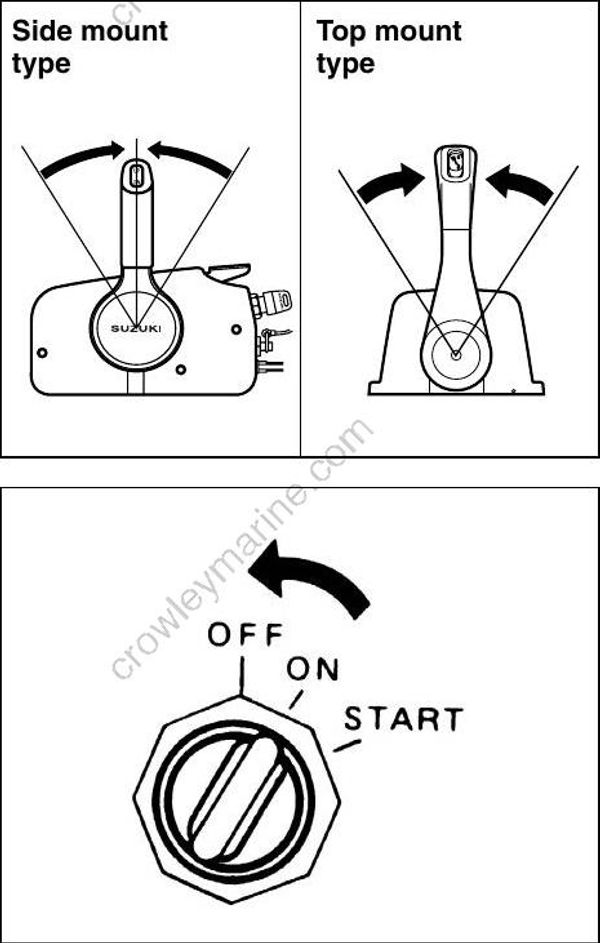
To prevent unauthorized use of your boat, be sure to remove the key and emergency stop switch lock plate when the boat is unattended.
To make sure that the emergency stop switch operates properly, stop the engine occasionally by pulling out the lock plate, while operating the engine at idling speed.
Section 4
The motor should be tilted up out of the water when you moor the boat in shallow water or if the motor will not be used for some time, to protect it from damage by underwater obstacles at low tide or corrosion from salt water.
Refer to the TILT LEVER section for details on how to tilt up the motor.
Do not allow your motor to rub against quay walls, piers or other boats when the boat is tied up.
OPERATION IN SHALLOW WATER
When operating your boat in shallow water, it may be necessary to tilt the motor higher than the normal trim angle. When you tilt the motor beyond the normal trim angle, however, you should only operate the boat at slow speeds. After returning to deep water, be sure to lower the motor to the normal trim angle.
To tilt the motor higher than the normal trim angle, use the Power Trim and Tilt switch.
Do not operate the engine above 1500 r/min or operate the boat in a planing attitude with the engine beyond the maxi- mum trim position (in other words, in a tilt position). In a tilt position, the swivel bracket will not have side support from the clamp bracket, and the power trim and tilt system will be unable to cushion the engine if the lower unit strikes an obstruction. This could lead to occupant injury. In addition, beyond the maximum trim position, the water intake holes may be above the water line, resulting in severe engine damage from overheating.
• When you tilt your motor for shallow water operation, make sure that the water intake holes remain in the water at all times and that water is always spraying out of the water discharge hole.
• Do not allow your motor to hit bottom. Serious damage can result. If the motor does strike bottom, inspect it immediately for damage.
OPERATION IN SALT WATER
After operating the motor in salt water, you should flush the water passages with clean, fresh water as outlined in the FLUSHING THE WATER PASSAGES section. If you do not flush the water passages, salt can corrode the motor and shorten its life.
OPERATION IN FREEZING WEATHER
When operating your outboard motor in freezing temperatures, you should keep the lower unit submerged in the water at all times.
When taking motor out of the water, stand it up in a vertical position until the cooling system drains completely.
If you leave your outboard motor out of the water in freezing temperatures with water still in the cooling system, the water can freeze and expand, causing severe damage to the motor.