

BEFORE ATTEMPTING TO START THE ENGINE
Lower the motor into the water.
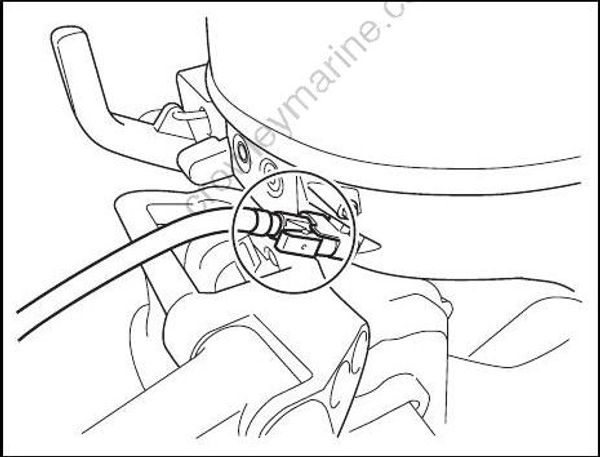
Make sure the fuel hose is securely connected to the fuel tank and the motor.
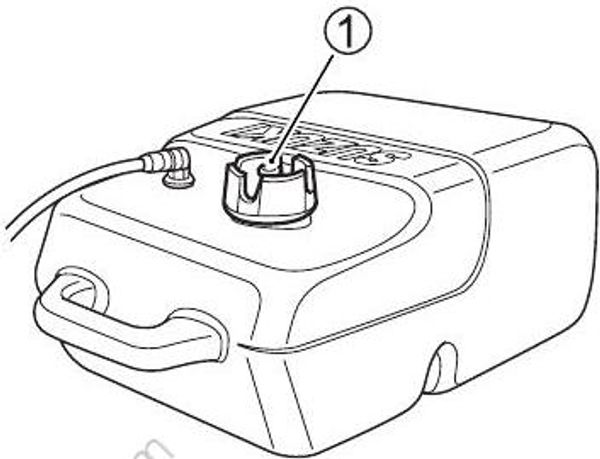
- Twist the air-vent screw (1) on the fuel tank cap counterclockwise to open the vent.
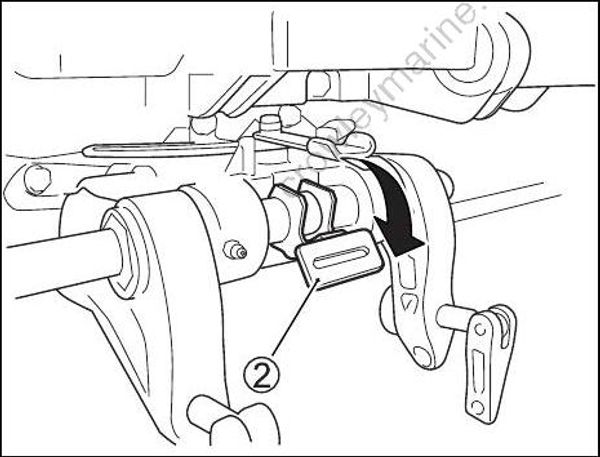
- Move the tilt lock lever (2) to the “LOCK” position.
- Make sure that the motor is in “NEUTRAL”.
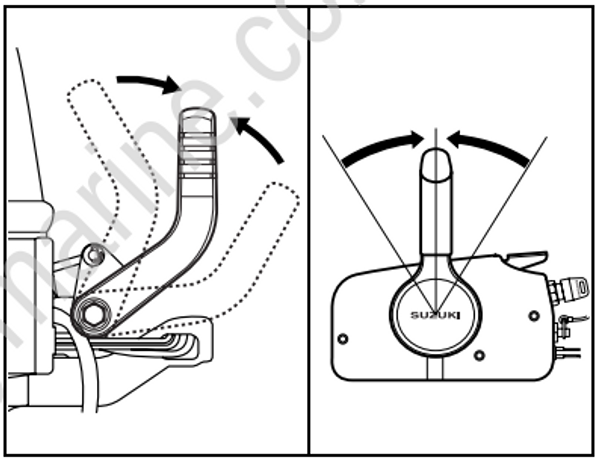
The recoil starter and electric starter can not be operated when the motor is in gear. To prevent damage to the recoil starter, make sure that the motor is in “NEUTRAL” before pulling the starter rope.
- Make sure the lock plate is in place and the emergency stop switch cord is fastened securely to your wrist or an appropriate item of clothing such as your belt.
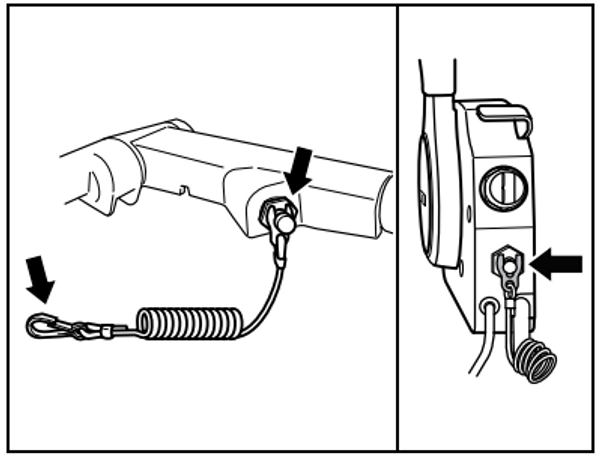
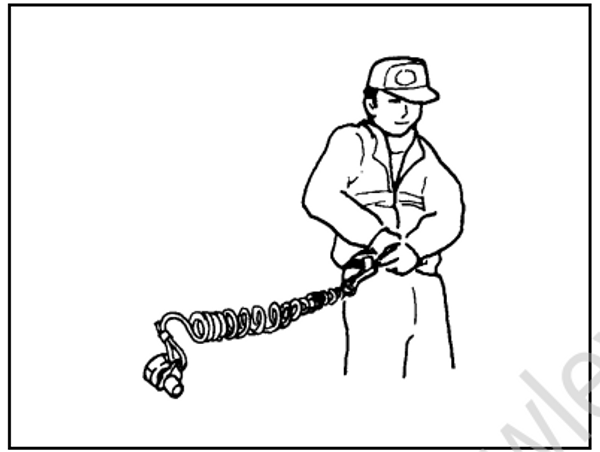
• The emergency stop switch cord should be fastened securely to the operator’s wrist or to an appropriate item of clothing (belt etc.). In this way, in an emergency, or if the operator is thrown overboard, the detached cord will stop the motor quickly.
• Ensure that no obstructions impede or restrict emergency stop switch operation.
• Take care not to pull the stop switch cord or knock out the lock plate during normal operation. The motor will stop abruptly, and the loss of forward motion may unexpectedly throw occupants forward.
There is a spare plastic lock plate for temporary use only. Remove it from the cord and place in a safe place on the boat. However, if you lose the original cord and lock plate, they should be replaced as soon as possible.
STARTING THE ENGINE
• Never start the engine or let it run indoors or where there is little or no ventilation. Exhaust gas contains carbon monoxide, a gas that is colorless and odorless and can cause death or severe injury.
• Before starting the engine, make sure that you have enough fuel and oil to complete your intended trip.
• Do not repeat opening and closing the throttle before starting the engine. This outboard motor has an accelerator pump. If you do so, the accelerator pump will send additional fuel into the engine, creating too rich a mixture for starting the engine.
• If the engine fails to start, check the emergency stop switch lock plate. If the lock plate is not in position, the engine cannot be started.
• The starter motor can operate even with the lock plate not in position; however, the engine cannot be started.
Start the engine using one of the starting procedures described below: