
INSPECTION BEFORE BOATING
To ensure the safety of all occupants, always conduct the following inspection before beginning your trip.
It is important to make sure that your boat and motor are in good condition and that you are properly prepared for an emergency.
Always perform the following checks before you begin boating:
Check that you have enough fuel for the intended run.
Check the level of engine oil in the sump.
Running the engine with insufficient oil can cause serious engine damage.
To check the oil level:
To avoid an incorrect assessment of engine oil level, check the level only when the engine has cooled.
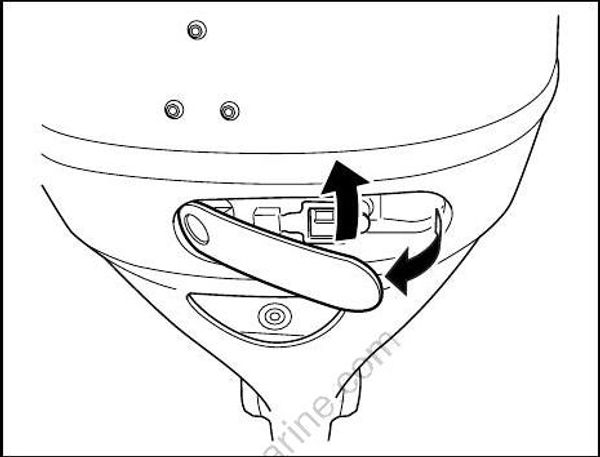
- Place the motor in a vertical position and remove the motor cover by unlocking the lever.
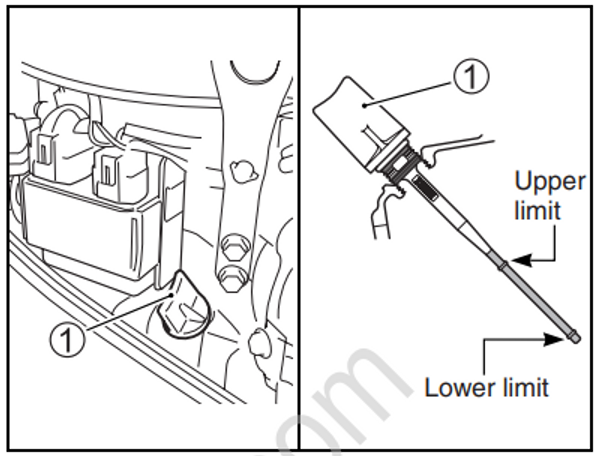
Remove the oil filler cap (dipstick) (1) and wipe oil off with a clean cloth.
To check the oil level, touch the filler cap threads onto the filler cap edge as shown.
Do not screw the filler cap.
If the engine oil is contaminated or discolored, replace with fresh engine oil (Refer to Inspection and maintenance/engine oil section).
The oil on the dipstick should be between the upper and lower limits shown on the dipstick. If the oil level indication is near the lower limit, add enough oil to raise the level to the upper limit.
To fill the engine with oil:
Remove the oil filler cap.
Fill with recommended engine oil to the upper level.
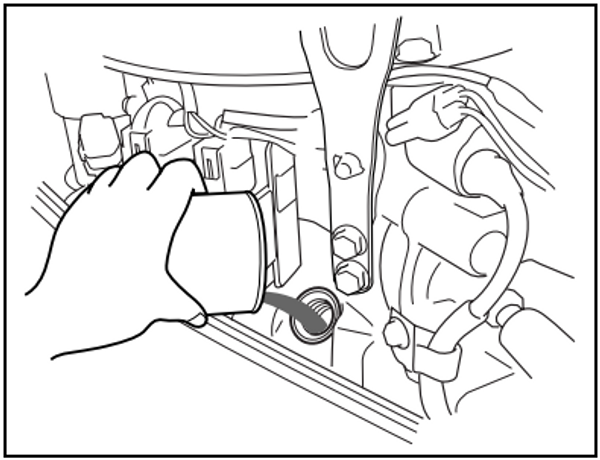
Do not overfill, as excessive oil can damage the engine.
- Tighten the oil filler cap securely.
Check the battery solution level.
The level should be kept between the MAX and the MIN level lines at all times. If the level drops below the MIN level line, refer to the MAINTENANCE section.Make sure that the battery leads are securely connected to the battery terminals.
Visually check the propeller to make sure it is not damaged.
Make sure the motor is securely mounted to the transom.
Make sure the tilt pin is securely installed in the proper position.
Make sure the starter rope is free from any evidence of fraying or wear.
(Recoil starter model)Make sure you have the boating safety and emergency equipment on board.
FUEL RESERVE
(6.6 Gallon Polyethylene Tank Only)
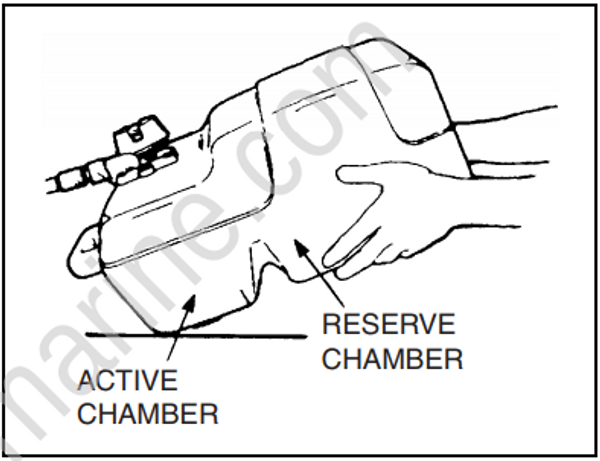
The total capacity of the fuel tank is 6.6 gallons including a reserve of about 1 gallon. When the fuel remaining in the tank reaches approximately 1 gallon, the active chamber will run dry and the motor will begin to stall. To use the reserve fuel, first turn the motor off. Tighten the vent screw on the fuel tank cap and tip the fuel tank as shown in the illustration to pour the remaining fuel from the reserve chamber to the active chamber. Open the vent screw, prime the fuel line and restart the motor.