

TRIM ANGLE ADJUSTMENT
To help maintain steering stability and good performance, always maintain the proper trim angle as shown in the illustration. The appropriate trim angle varies depending on the combination of the boat, engine, and propeller, as well as operating conditions.
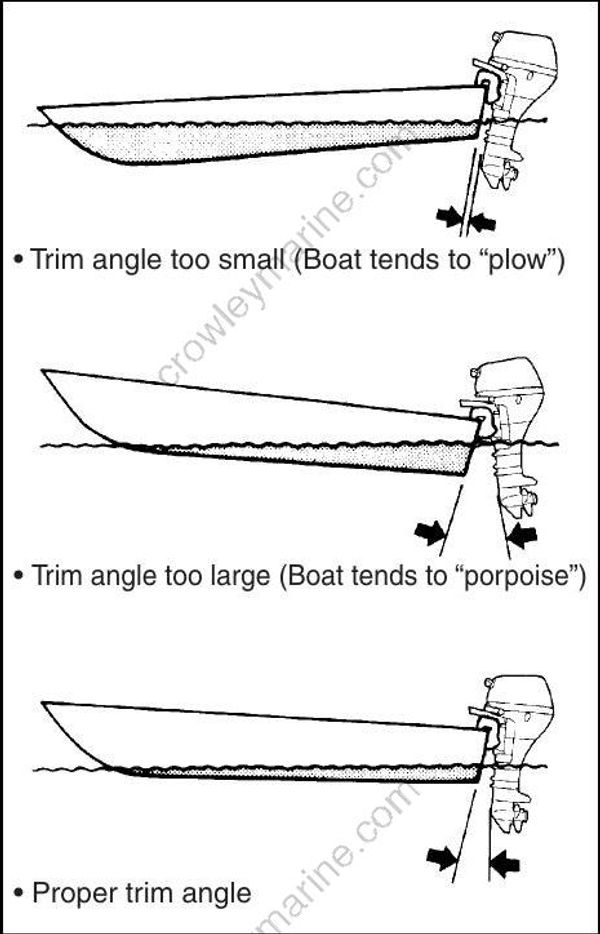
Make a test run in the boat to determine if the trim angle needs to be adjusted.
To adjust the trim angle:
Lock the motor in the fully tilted up position.
(Refer to the TILT UP LOCK ARM section)Reposition the tilt pin A in the desired holes.
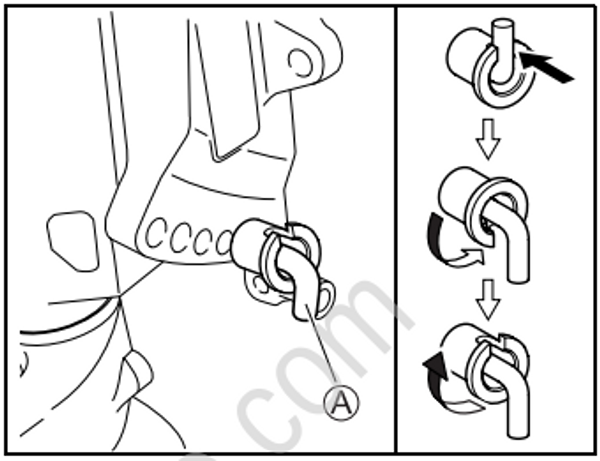
- Lower the motor back down.
To lower the bow, move the pin towards the boat. To raise the bow, move the pin away from the boat.
After you have made an adjustment to the trim angle, make another test run to make sure you have adjusted it to the correct angle.
If the trim angle is too small, the boat may “plow” or “bow steer”, causing instability. If the trim angle is too large, steering control may be lost, the boat may “chine walk” from side to side or “porpoise” up and down, all of which may cause occupants to be thrown overboard.
Do not operate the engine with the tilt pin removed. Steering control could be affected.
TRIM TAB ADJUSTMENT
This adjustment is used to compensate for the possible tendency of your boat to veer slightly to port or starboard. This tendency could be due to such things as propeller torque, motor mounting position, etc.
To adjust the trim tab:
- Loosen the bolt (A) that holds the trim tab in place.
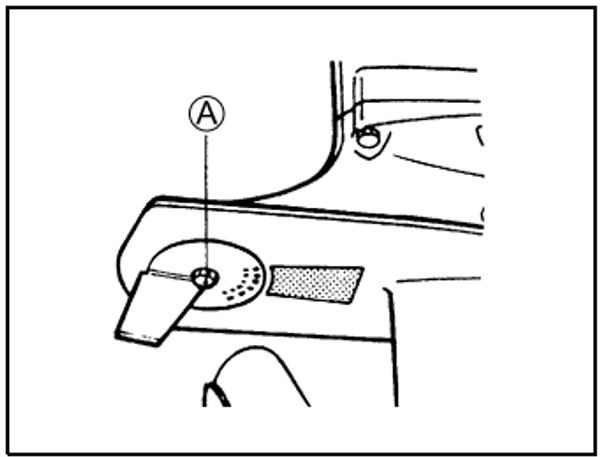
- If the boat tends to veer to port, move the rear end of the trim tab toward the port side.
If the boat tends to veer to starboard, move the starboard side.
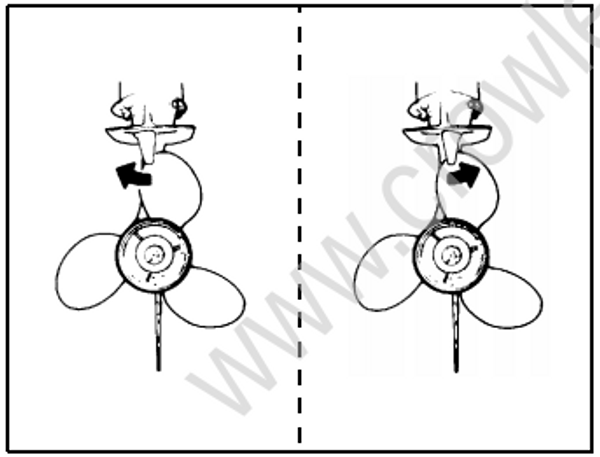
- Tighten the bolt that holds the trim tab in place.
After adjusting the trim tab, check to see if the boat still tends to veer to one side. If necessary, readjust the trim tab.
STEERING TENSION ADJUSTMENT
The steering on your outboard motor should be smooth and not tight. Adjust the steering tension so that there is only a slight resistance to steering movement.
REMOTE CONTROL MODEL
To increase the steering tension, turn the steering tension bolt (A) clockwise. To decrease the steering tension, turn the steering tension bolt counterclockwise.
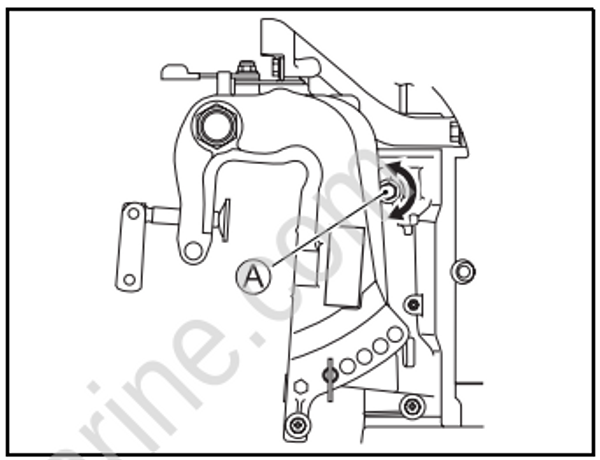
TILLER HANDLE MODEL
To increase the steering tension, turn the steering tension bolt (A) clockwise. To decrease the steering tension, turn the steering tension bolt counterclockwise.
For auxiliary adjustment, use the steering tension lever (B). To increase the steering tension, move the lever (B) to the left. To decrease the steering tension, move the lever to the right.
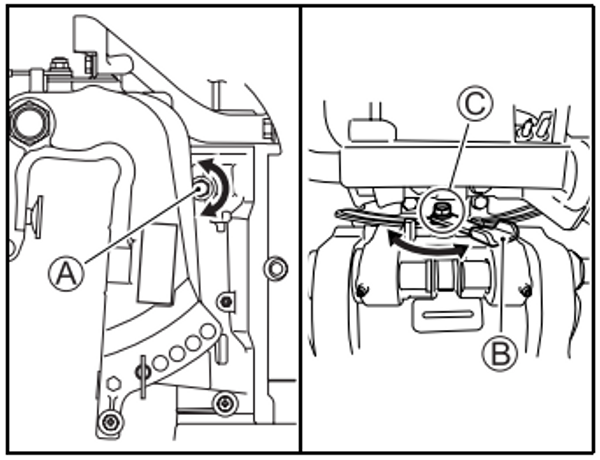
• To adjust initial steering friction, use the steering tension bolt (A) with the steering tension lever (B) positioned right fully.
• Do not apply a grease to the area C.
THROTTLE TENSION ADJUSTMENT
TILLER HANDLE MODEL
The tension of the throttle control grip can be adjusted according to your preference. To increase the tension, turn the throttle tension adjuster (A) clockwise. To decrease the tension, turn the adjuster counterclockwise.
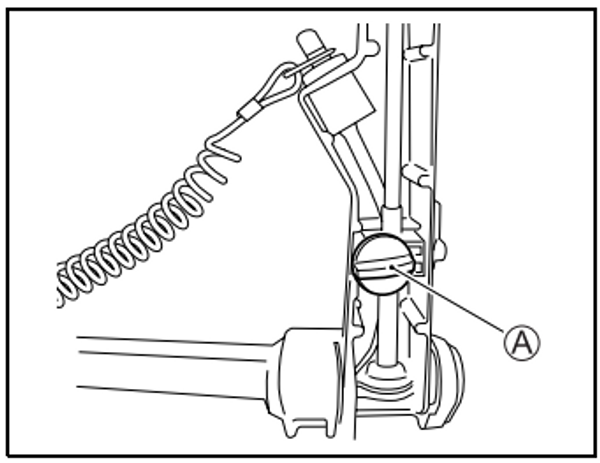
REMOTE CONTROL MODEL
The tension of the remote control handle can be adjusted according to your preference. To increase the tension, turn the throttle tension adjuster (A) clockwise. To decrease the tension, turn the adjuster counterclockwise.
IDLE SPEED ADJUSTMENT
The idle speed of your outboard motor has been set by your dealer. If it is necessary to adjust the idle speed, use the following procedure:
Warm up the engine for about 5 minutes.
Make sure that the motor is in “NEUTRAL” and the throttle control grip is fully closed.
Turn the idle adjustment screw (A) clockwise to increase idle speed or counterclockwise to decrease idle speed.
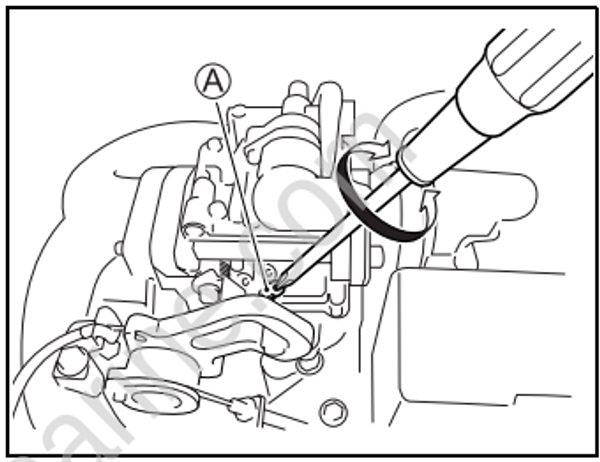
| Idle speed (in Neutral) | 950 – 1050 r/min. (min–1) |
If idle speed cannot be set within the specified range, contact your authorized Suzuki Marine Dealer.