

Owner's Manual
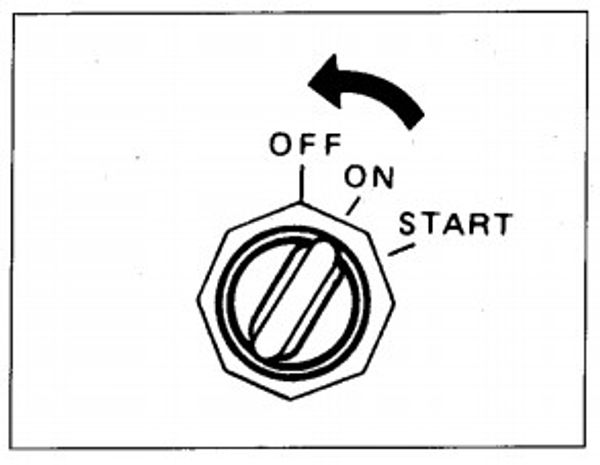
To prevent unauthorized use of your boat, be sure to remove the key and emergency stop switch lock plate when the boat is unattended.
To make sure that the emergency stop switch operates properly, stop the engine occasionally by pulling out the look plate, while operating the engine at idling speed.
MOORING
The motor should be tilted up out oi the water when you moor the boat in shallow water or it the motor will not be used for some time, to protect it from damage by underwater obstacles at low tide or corrosion from salt water.
Refer to the TILT LEVER section for details on how to tilt up the motor.
Do not allow your motor to rub against quay walls, piers or other boats when the boat is tied up.
OPERATION IN SHALLOW WATER
When operating your boat in shallow water, it may be necessary to tilt the motor higher than the normal trim angle. When you tilt the motor beyond the normal trim angle, however, you should only operate the boat at slow speeds. After returning to deep water, be sure to lower the motor to the normal trim angle.
To tilt the motor higher than the normal trim angle, use the Power Trim and Tilt switch.
Do not operate the engine above 1500 r/min or operate the boat in a planing attitude with the engine beyond the maximum trim position (in other words, in a tilt position). In a tilt position, the swivel bracket will not have side support from the clamp bracket, and the power trim and tilt system will be unable to cushion the engine if the lower unit strikes an obstruction. This could lead to occupant injury. In addition, beyond the maximum trim position, the water intake holes may be above the water line, resulting in severe engine damage from overheating.
• When you tilt your motor for shallow water operation, make sure that the water intake holes remain in the water at all times and that water is always spraying out of the water discharge hole.
• Do not allow your motor to hit bottom. Serious damage can result. If the motor does strike bottom, inspect it immediately for damage.